How the pool filter size calculator works
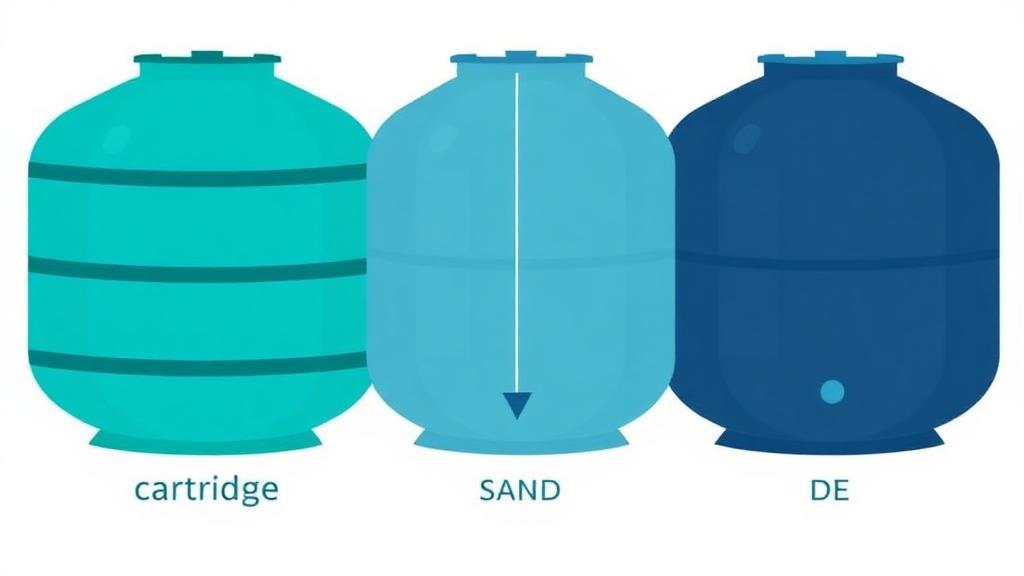
Filters are rated by media area and a design flow rate. Sand handles about 15 GPM per square foot, DE about 2 GPM, and cartridge about 0.375 GPM for long service life.
Bigger is better here. A filter with extra area runs at lower pressure, cleans less often and lets a variable speed pump stay on its cheap low setting.
The formula, step by step
Filter Area (sq ft) = Required GPM / Design Flow Rate
- Find required GPM: gallons divided by turnover hours, then divided by 60.
- Divide GPM by 15 for a sand filter.
- Divide GPM by 2 for a DE filter.
- Divide GPM by 0.375 for a cartridge filter.
Worked example
A 25,000 gallon pool on an 8 hour turnover needs 52 GPM.
Cartridge: 52 / 0.375 = 139 square feet, so a 150 square foot element.
Sand: 52 / 15 = 3.5 square feet, which is about a 24 inch tank.
Watch it done
This short video walks through the same job in real life, so you can match what you see on screen to what you do at the pool.
Tips before you start
Match the filter to the pump, not to the pool alone. If you later add a bigger pump, the filter has to keep up or pressure climbs fast.
Clean at 8 to 10 psi over your clean starting pressure. Waiting longer strains the motor and pushes dirt through the media.
Pool Filter Size Calculator FAQs
What size pool filter do I need?
Size it off flow, not gallons. Work out your GPM first, then divide by the design rate for the filter type you want.
Is a bigger filter better?
Usually yes. More area means lower pressure, longer runs between cleanings and slightly lower power bills.
Sand, cartridge or DE?
Sand is cheapest to run, cartridge filters the finest for the price, and DE gives the clearest water but needs a recharge after every backwash.